
Stand at Belfast’s peace walls for five minutes and you quickly realise this is not a city best understood from a leaflet. A local guide Troubles tour Belfast visitors choose should do more than point at murals and recite dates. It should give shape to lived experience, explain why certain streets still matter, and help you make sense of a past that remains close to the surface.
That matters because The Troubles are not ancient history here. They are part of family memory, neighbourhood identity and the physical layout of the city itself. If you want the sort of visit that leaves you better informed rather than simply photographed beside a mural, the quality of the guide is everything.
Why a local guide troubles tour Belfast visitors book matters
Belfast is compact, but its history is layered. You can move from the city centre to the Falls Road or the Shankill in a short drive, yet the political, social and emotional distance between communities was once vast. Without context, many visitors see striking artwork, gates, memorials and walls, but miss the meaning behind them.
A strong local guide does not flatten that complexity into a tidy story. They explain how civil rights, discrimination, policing, paramilitary violence, British state involvement and political change all shaped daily life. Just as importantly, they explain what changed after the Good Friday Agreement and what has not fully disappeared.
That is the difference between sightseeing and understanding. One gives you images. The other gives you perspective.
What makes a good local guide for a Troubles tour in Belfast?
The first thing is credibility. Visitors are right to be cautious with this subject. The best guides are not performing history from a script they barely know. They speak with authority because they know the streets, the communities and the atmosphere that shaped the period. In many cases, they lived through it.
That lived experience has to be matched with balance. Belfast’s history cannot be told honestly from one angle only. A good guide will not pretend every view is identical, because it is not, but they will make space for complexity. They will explain republican and loyalist narratives, discuss the role of the British Army and police, and speak about loss on all sides without turning the tour into an argument.
Tone matters too. This is serious history, but it should not feel inaccessible. The best local guides know how to speak plainly, answer difficult questions and put visitors at ease. There is room for warmth, local humour and a bit of Belfast craic, provided the subject is treated with respect.
More than murals and photo stops
Many first-time visitors arrive expecting a murals tour. The murals are important, of course. They are some of the most powerful public expressions of political identity anywhere in Europe. But if a tour begins and ends with a few photos, it has missed the point.
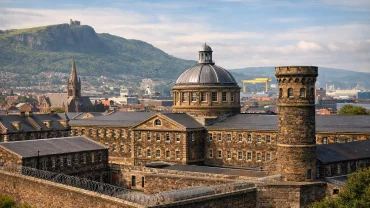
The murals sit within a wider landscape. Peace lines, memorial gardens, former flashpoints, interface areas and roads once heavily associated with checkpoints or unrest all tell part of the story. Sites such as Crumlin Road Gaol can deepen that picture further, linking political conflict with prison history and the wider machinery of the state.
A worthwhile tour joins these places together into a narrative. It helps you understand why a wall still stands, why a gate may still close at night, and why a particular image on a gable wall carries such emotional weight. That joined-up understanding is what most visitors are really looking for, even if they do not know it before they arrive.
The trade-off between private and group tours
Not every traveller wants the same experience, and this is one area where it depends on your priorities. A larger group tour can be fine if budget is the main concern and you simply want a broad introduction. You may still hear useful commentary and visit key sites.
But The Troubles are a subject where private touring often works far better. It gives you time to ask questions you might hesitate to raise in a crowd. It allows the guide to adapt to your level of knowledge, whether you are arriving with a deep interest in Irish politics or only a vague sense of the headlines. It also gives practical comfort – direct pickup, a steadier pace and the ability to spend longer where your interest is strongest.
For cruise passengers or short-stay visitors, that flexibility is especially valuable. Belfast is easy enough to move around, but time can disappear quickly if you are trying to piece things together on your own.
A balanced perspective is not a vague one
Some visitors worry that the word balanced means watered down. It should not. A balanced guide is not someone who avoids hard truths or smooths over pain. It is someone who can handle those truths honestly without turning the experience into one-sided propaganda.
That means acknowledging sectarianism, state failures, terrorism, trauma and the long consequences of division. It also means recognising courage, political progress and the quieter reality of how ordinary people carried on with work, school and family life during dangerous times.
This is where Belfast Black Taxi Tour has a genuine strength. The city’s story is not presented as a spectacle but as shared heritage, told through authentic stories and cross-community understanding. For visitors, that creates trust. You are not just hearing what happened. You are hearing how it felt, why it mattered and why memory still shapes modern Belfast.
What you should expect from the experience
A proper Troubles tour should leave you with a clearer sense of both past and present. You should come away understanding the origins of the conflict in broad terms, the role of key events and agreements, and the way geography shaped division. You should also understand that Belfast today is not frozen in conflict.
That point is important. Visitors sometimes arrive expecting a city trapped by its history. The reality is more interesting than that. Belfast is vibrant, creative and forward-looking, yet still marked by visible reminders of what happened here. A good guide helps you hold both truths together.
You should also expect candour. If you ask thoughtful questions, a strong local guide will meet them directly. They will usually tell you when there is no single agreed answer, because on many issues there is not. That honesty is part of what makes the experience worthwhile.
How to choose the right local guide troubles tour Belfast offers
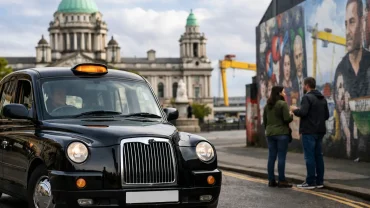
Start with the guide, not the vehicle. A black cab is iconic and practical, but it is the storytelling that makes the tour memorable. Look for signs of firsthand knowledge, local roots and clear experience with the subject. Reviews often reveal whether visitors felt informed, comfortable and respected.
Next, consider whether the tour gives enough time. Rushing through contested history is rarely satisfying. Even on a shorter itinerary, there should be room for conversation rather than a constant dash between stops.
It is also worth checking how the tour handles pickup and planning. For visitors arriving by cruise ship, staying in the city centre or travelling with family, convenience matters. A premium private experience should feel well organised without becoming stiff or impersonal.
Finally, trust your instincts about tone. If the description feels sensational, overly theatrical or politically loaded, it may not be the right fit. The best tours are confident without being showy. They know the power of the story does not need exaggeration.
Why visitors remember this tour long after Belfast
People often leave a Troubles tour talking less about what they saw than about what they understood. A wall becomes more than a wall. A mural becomes a statement of memory, identity or grief. A neighbourhood becomes a place where real people navigated fear, loyalty, anger and hope.
That is the value of local guiding in Belfast. It turns unfamiliar history into human history. It gives visitors enough context to ask better questions, and enough local insight to see the city as more than headlines from another era.
If you are going to spend part of your time in Belfast trying to understand The Troubles, it is worth doing it properly. Choose a guide who knows the ground, respects the complexity and can tell the story with honesty. You will leave with more than photographs – you will leave with a clearer view of Belfast, and that stays with you.

Comment (0)