
Stone walls, iron doors, echoing corridors – few places in Belfast leave an impression quite like this one. A Crumlin Road Gaol tour is not just a walk through an old prison. It is a close-up encounter with a city shaped by conflict, class, punishment and survival, all told inside one of the most atmospheric buildings in Northern Ireland.
For many visitors, the gaol is one of the stops that turns Belfast from a place they have heard about into a place they begin to understand. You can read dates on a plaque anywhere. Standing in a condemned cell or beneath the tunnel that linked prison to courthouse is different. It gives history weight.
Why the Crumlin Road Gaol tour matters
Built in the 1840s, Crumlin Road Gaol held men, women and children over more than 150 years of operation. During that time it reflected far more than the prison system. It revealed the realities of Victorian justice, poverty, political unrest and, later, the pressures of Northern Ireland’s modern conflict.
That is why the site matters so much. It is not simply “dark tourism”, and it should not be treated as a gimmick. The building carries stories of ordinary hardship alongside stories tied to some of the most sensitive chapters in Belfast’s past. When interpreted properly, it helps visitors grasp how institutions, communities and politics overlapped here.
The strongest experiences at the gaol are the ones that balance fact with feeling. You want the dates, the architecture and the prison history, of course. But you also want context – who was imprisoned here, why it mattered, and how the gaol fits into the wider story of Belfast before, during and after The Troubles.
What you will see on a Crumlin Road Gaol tour
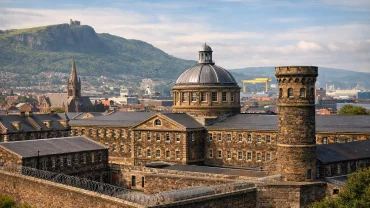
The building itself does a lot of the storytelling. It is imposing from the outside and deeply atmospheric within, with wings radiating from a central circle in the classic Victorian prison style. As you move through the site, you get a strong sense of how order and surveillance were built into the architecture.
You will usually pass through cell blocks, holding areas and punishment spaces, each revealing a different side of prison life. Some rooms feel stark and clinical. Others carry a heavier emotional charge, particularly where stories of execution, isolation or political imprisonment are told. The condemned man’s cell and execution area tend to stay with people long after the visit ends.
One of the most talked-about features is the underground tunnel to the old courthouse across the road. It is a simple idea, but standing there brings home the machinery of justice in a very physical way. Prisoners were moved beneath the street, hidden from public view, from trial to confinement with chilling efficiency.
There is also a strong interpretive element throughout. Depending on the format of your visit, you may encounter exhibits, audio-visual material and stories linked to particular inmates or periods in the gaol’s history. That helps bring the place beyond bricks and bars.
The history behind the walls
What makes this site especially compelling is the range of lives that passed through it. In the nineteenth century, many prisoners were incarcerated for offences that today would prompt serious questions about social conditions as much as criminal behaviour. Poverty sat close to punishment.
Over time, the gaol became linked with political upheaval as well as criminal justice. During the conflict in Northern Ireland, imprisonment became part of a much wider and more contested story. For visitors trying to make sense of Belfast, that matters. Places like Crumlin Road Gaol cannot be separated from the social and political tensions around them.
This is where context becomes everything. A prison tour without explanation can feel voyeuristic. A well-guided visit can do the opposite. It can show how the gaol sat within a divided society and why memory around such places is still sensitive. Belfast has moved forward in remarkable ways, but it has not forgotten.
How long to allow and who it suits
Most visitors find the gaol manageable within a couple of hours, though that depends on your pace and how deeply you like to engage with exhibits. If you are someone who reads every panel and takes time in each wing, allow longer. If you are fitting it into a wider day of sightseeing, it can sit comfortably alongside other major Belfast stops.
It suits a broad range of travellers, but especially those with an interest in history, politics and heritage. Adults usually get the most from it, though older children and teenagers often find it fascinating too. Very young children may be less engaged, simply because the themes are weighty and the atmosphere can be intense.
There is a practical trade-off here. A standalone visit gives you time to absorb the building on its own terms. But if you really want to understand how the gaol connects to the peace walls, murals and the neighbourhoods shaped by conflict, it often works best as part of a wider guided day in the city.
Why local guidance makes a difference
Belfast is a city where place and story are tightly bound together. That is particularly true when you step into sites connected to justice, conflict and identity. The gaol tells one part of the story. The surrounding streets, communities and landmarks tell the rest.
That is why many visitors choose to pair the site with a guided black taxi experience. A good local guide does more than point out where things happened. They explain why they happened, how different communities experienced them, and what the city feels like now. In a place with layered and contested history, that balanced perspective matters.
At Belfast Black Taxi Tour, that local interpretation is central to the experience. Visitors are not just shown Belfast – they are given the lived context behind it by guides who understand the history personally and present it with care. For anyone trying to move beyond headlines and into real understanding, that makes all the difference.
Is the tour suitable if you know little about The Troubles?
Absolutely. In fact, many first-time visitors arrive with only a rough sense of Northern Ireland’s past. The gaol can be a very effective starting point because it grounds history in a real place. You do not need specialist knowledge to feel the significance of the building.
That said, your experience will depend on what you want from the visit. If you are after a dramatic heritage attraction, you will find one. If you are after a fuller understanding of Belfast, you may leave with questions that deserve a broader conversation. That is no bad thing. The best historical sites should open the door to deeper curiosity.
Practical tips before you go
Wear comfortable shoes and expect uneven surfaces in parts of the building. Bring a layer even on a mild day, as old stone interiors can feel cool. If you are sensitive to confined spaces or emotionally heavy themes, give yourself time and do not rush.
Photography is part of the experience for many visitors, but it is worth remembering that this is not just an eye-catching backdrop. It is a place marked by hardship, trauma and contested memory. A little respect goes a long way.
If you are planning your Belfast itinerary, think carefully about timing. The gaol sits well with other historic and political sites, but cramming too much into one afternoon can flatten the impact. This is one place that rewards a bit of space around it.
More than a prison visit
The reason people remember this experience is simple. A Crumlin Road Gaol tour gives you more than prison history. It gives you a sharper sense of Belfast itself – the discipline of the old city, the scars of division, and the resilience of a place still telling its story with honesty.
If you come ready to listen, the building does the rest. And once you step back out onto the Crumlin Road, the city around you will make a little more sense.


Comment (0)