
You can read about The Troubles in a book, watch a documentary, or stand in front of a mural and realise within seconds that Belfast’s history is not abstract at all. A Belfast political tour puts you in the streets where events unfolded, where communities were shaped by conflict, and where the city is still working out what peace looks like in daily life.
For many visitors, that first encounter is striking. One wall carries memorials and symbols of identity. A few minutes later, another area tells a very different story with equal conviction. This is why the right tour matters. Belfast is not a place to rush through with half-understood facts. It rewards context, honesty and guides who know the history because they lived alongside it.
Why a Belfast political tour matters
This is not simply a sightseeing trip with a few famous landmarks added in. The political story of Belfast sits at the heart of the city’s modern identity. If you want to understand why the murals matter, why peace lines remain, or why particular streets carry such weight, you need more than dates and headlines.
A good tour makes the history human. It explains how politics affected ordinary families, neighbourhoods, schools and daily routines. It also shows that Belfast is not frozen in the past. The city you see today is creative, ambitious and full of character, but its recent history still shapes how people speak, remember and relate to one another.
That balance is what visitors often appreciate most. They are not looking for sensationalism. They want a clear, respectful account of what happened, why it happened, and how Belfast has changed.
What you’ll typically see on a Belfast political tour
Most political tours of Belfast focus on the areas that help make sense of the conflict and the peace process. The Falls Road and the Shankill Road are usually central because they represent republican and loyalist communities with distinct histories, identities and political traditions.
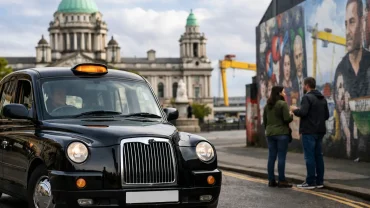
Along the way, murals are often the first thing people notice. Some commemorate hunger strikers, civil rights figures or local community experiences. Others reflect British identity, loyalist paramilitary history, or support for the Union. These artworks are not random decoration. They are public statements, acts of remembrance and, in many cases, markers of how communities saw themselves during turbulent decades.
Visitors are also drawn to the peace walls. For those unfamiliar with Belfast, the phrase can sound symbolic. In reality, these are physical barriers, gates and interfaces that still separate some areas. Seeing them in person changes how people understand the city. Peace here was not a switch that was flicked overnight. It has been a long, careful process, and the walls are part of that story.
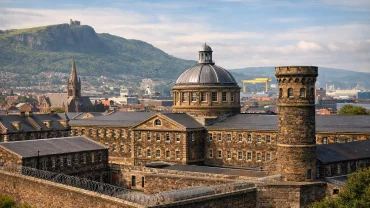
Many tours also pass key sites such as Clonard Monastery, Bombay Street, Crumlin Road Gaol and other locations linked to internment, policing, imprisonment and community resistance. The route varies, and that is no bad thing. A private experience can adapt depending on whether your interest is political history, family heritage, photography or a broader understanding of Belfast’s transformation.
The difference between a good tour and a forgettable one
Not every Belfast political tour offers the same depth. Some stick to a script. Some focus too heavily on one side. Others can leave visitors with dramatic images but little understanding.
The best tours do something harder and more valuable. They hold complexity without making it confusing. They explain that language matters, that identity matters, and that the same event may be remembered very differently depending on who is telling the story. That does not mean avoiding facts. It means presenting them with care.
This is especially important for visitors arriving with limited background knowledge. You do not need to be an expert in Irish or British politics before you come. In fact, many first-time guests know only the broad outline of The Troubles. A strong guide meets you where you are, answers direct questions, and gives you enough context to make sense of what you are seeing.
Lived experience makes a real difference here. When a guide can speak not just about historical milestones but about what it felt like to grow up with checkpoints, military patrols or divided neighbourhoods, the city becomes more understandable. The history stops feeling distant.
Why private tours suit this subject
There is a reason so many visitors choose a private black taxi experience for this kind of tour. The subject matter is personal, sensitive and often emotional. In a private setting, people tend to ask the questions they might hold back in a larger group.
That could be a question about religion, schooling, segregation, paramilitary murals, or how communities feel today. It could be a practical question about safety or whether peace walls are still necessary. Those conversations are often where the real value lies.
Private touring also gives you comfort and flexibility. Direct pickup is particularly helpful if you are staying in the city centre, arriving from a cruise ship, or trying to fit the tour into a busy itinerary. You spend less time worrying about logistics and more time engaging with the story in front of you.
There is another point worth making. Belfast weather can turn quickly, and a black cab offers a practical advantage. You can move comfortably between sites, pause where it matters, and still cover a meaningful route without the experience feeling rushed.
Choosing a balanced Belfast political tour
If you are booking for the first time, balance should be high on your list. That does not mean a bland version of events. It means hearing the history presented with honesty, fairness and respect for different experiences.
A balanced guide will not pretend that every viewpoint is identical or that all memories sit neatly together. Belfast is more complicated than that. What good guiding does is acknowledge those differences while helping visitors understand the wider picture. You should come away with a stronger grasp of the conflict, the communities involved and the peace process that followed.
This is one area where local credibility really matters. Belfast Black Taxi Tour is shaped by a shared-heritage approach, with Catholic and Protestant ownership at its core, and that gives many visitors added confidence. On a subject where trust matters, a genuinely balanced perspective is not a marketing extra. It is the foundation of a worthwhile experience.
Who gets the most from this experience
A Belfast political tour suits far more than academic history enthusiasts. Couples on a city break often find it gives real meaning to their time in Belfast. Families with older children value the clarity of having difficult history explained in a human, accessible way. Cruise passengers appreciate a well-organised private excursion that uses limited time wisely.
It also works well for visitors with Irish heritage or those tracing family connections. Sometimes people arrive with stories passed down through generations but little sense of geography. Standing in the actual streets where these histories played out can be deeply moving.
That said, it is not a one-size-fits-all experience. Some guests want the strongest focus on conflict history. Others prefer more attention on peace-building and the city’s progress. The best tours allow room for both, adjusting the conversation to your interests without losing historical accuracy.
What Belfast feels like after the tour
One of the most striking things visitors say is that Belfast feels different afterwards. Not heavier, necessarily, but clearer. The murals are no longer just photo stops. The peace lines are no longer an odd curiosity. The city’s humour, resilience and sharp intelligence make more sense when you understand what people here have lived through.
That is the real value of this experience. It helps you see Belfast as a city of stories, contradictions and enormous change. You meet not only the history of conflict, but the character of the place – direct, resilient and full of craic when the moment allows.
If you are deciding whether a Belfast political tour is worth your time, the answer depends on what kind of visitor you want to be. If you are happy with surface-level sightseeing, probably not. But if you want Belfast explained by people who know its streets, its scars and its progress, this is often the tour that stays with you longest.
Give yourself the time to hear the city properly. Belfast has never been short of stories, and the right guide helps you understand which ones still matter now.

Comment (0)