
Ask ten people what caused the Troubles in Northern Ireland and you may hear ten different answers. Some will say religion. Some will say British rule. Others will point to discrimination, partition, paramilitaries, policing, or the civil rights movement. The truth is that the conflict did not begin because of one single issue. It grew from a tangled mix of history, identity, power, fear and inequality, and that is exactly why it still needs to be explained with care.
For many visitors to Belfast, one of the first surprises is this: the Troubles were not an ancient tribal feud, and they were not simply Catholics versus Protestants. Religion mattered, but mainly as a marker of community identity. At the heart of the conflict were constitutional questions – should Northern Ireland remain part of the United Kingdom or become part of a united Ireland? – along with very real disputes over rights, representation, housing, jobs and policing.
What caused the Troubles in Northern Ireland? The short answer
The short answer is that the Troubles were caused by a long political and social conflict over national identity, state power and equal treatment. In Northern Ireland, many unionists and loyalists, who were mostly Protestant, wanted to stay in the UK. Many nationalists and republicans, who were mostly Catholic, saw themselves as Irish and wanted Irish unity. That divide was sharpened by decades of discrimination against many Catholics and nationalists, and by a state structure that was widely seen as favouring the unionist majority.
When civil rights protests grew in the late 1960s, tensions that had been building for generations burst into violence. The state struggled to respond fairly. Communities became more polarised. Paramilitary groups expanded. British troops were deployed. What followed was a conflict that lasted for roughly thirty years and touched nearly every part of life.
The deeper roots of what caused the Troubles in Northern Ireland
To understand the Troubles properly, you have to go back well before 1969. The roots lie in centuries of contested history in Ireland, especially the relationship between Britain and Ireland and the settlement of Protestant communities in Ulster. Over time, different traditions developed very different ideas about belonging, sovereignty and citizenship.
By the early twentieth century, the question of Irish self-government had become explosive. When Ireland was partitioned in 1921, Northern Ireland was created with six counties and a built-in unionist majority. For unionists, this offered security within the UK. For many nationalists, partition was a bitter compromise that left them inside a state they had not chosen and did not fully trust.
That new state was not simply politically divided. It was socially divided too. In many areas, people lived separately, went to different schools, worshipped in different churches and inherited different versions of history. Those divisions did not automatically make violence inevitable, but they did create fertile ground for mistrust.
Partition, power and discrimination
One of the biggest reasons the Troubles happened was that Northern Ireland developed with deep structural inequalities. For decades, the Stormont government was dominated by unionist parties. Many Catholics and nationalists felt excluded from political power and disadvantaged in public life.
This was most visible in housing, employment and local government. In some areas, council housing allocations were unfairly handled. Electoral boundaries were sometimes drawn in ways that helped unionist control. Public sector jobs and policing were widely seen by nationalists as institutions where they were under-represented. Not every Protestant benefited and not every Catholic suffered equally, but the broad pattern of imbalance was real and politically corrosive.
That matters because conflicts rarely start from identity alone. They become dangerous when identity is tied to unequal power. If one community feels the state belongs to the other, resentment hardens quickly.
The civil rights movement and the escalation of tension
In the 1960s, inspired in part by civil rights campaigns elsewhere, groups in Northern Ireland began demanding fairer treatment. Their calls were straightforward enough: one person, one vote in local elections, fair housing allocation, equal opportunities in employment and reform of policing.
These marches were not, at first, a campaign for armed conflict. They were a demand for reform. But the response to them exposed how fragile Northern Ireland had become. Some demonstrations were met with hostility and violence, and televised scenes of confrontation drew international attention.
For many nationalists, this confirmed that peaceful pressure was being resisted. For many unionists, the movement seemed like a threat to the state itself, not just a push for reform. That difference in perception was crucial. One side saw civil rights; the other often saw a constitutional challenge in disguise.
Why religion is only part of the story
Visitors often ask whether the Troubles were a religious war. The honest answer is no – at least not in the simple sense. People were often identified as Catholic or Protestant, but the conflict was more political and national than theological.
Being Catholic often aligned with Irish nationalist identity. Being Protestant often aligned with British unionist identity. Those labels became shorthand for wider loyalties, neighbourhoods, schools and historical memory. That is why religion appears so prominently in any discussion of the Troubles, even though the argument was not really about doctrine or worship.
This distinction matters. If you reduce the Troubles to religion, you miss the constitutional dispute, the inequalities, and the role of the state. You also miss the fact that many people, on all sides, wanted reform, safety and dignity rather than conflict.
The role of policing, unrest and paramilitaries
As tensions rose in the late 1960s, confidence in policing collapsed in many nationalist areas. The Royal Ulster Constabulary was viewed by many unionists as legitimate, but by many nationalists as partisan. Once trust in law and order breaks down, communities start looking elsewhere for protection, and that is a dangerous moment in any divided society.
Serious unrest in places such as Derry and Belfast led to British troops being sent onto the streets in 1969. At first, some Catholic areas welcomed them as a buffer against violence. That did not last. Internment without trial, street confrontations and events such as Bloody Sunday deepened anger and drove support towards republican paramilitaries, especially the Provisional IRA.
On the other side, loyalist paramilitary groups presented themselves as defenders of unionist communities and carried out their own campaigns of violence. The result was a brutal cycle of bombings, shootings, punishment attacks and reprisals. Ordinary civilians bore much of the cost.
Fear, identity and competing truths
Another part of what caused the Troubles in Northern Ireland was fear – fear of domination, fear of betrayal, fear of being forced into the other side’s future. Unionists feared that reform could become a stepping stone to a united Ireland. Nationalists feared that without deep change, they would remain second-class citizens.
Those fears were not always rational, but they were deeply felt. That is one reason the conflict proved so difficult to contain. Each community carried its own losses, memories and justifications. What looked like defence to one side looked like aggression to the other.
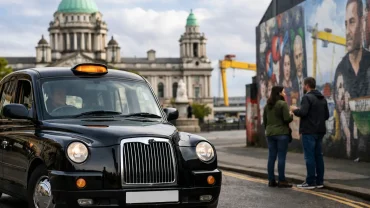
When visitors take time to hear local stories, that complexity becomes clearer. The murals, memorials and peace walls are not just landmarks. They are expressions of identity, grief and political belief. They show how history is lived, not just recorded.
Could the Troubles have been avoided?
There is no simple answer. Better political leadership, fairer institutions and more effective reform in earlier decades might have reduced the chances of conflict. Equally, once violence escalated, each heavy-handed response tended to make the situation worse. But it would be too neat to pretend there was one turning point where everything could easily have been fixed.
What can be said with confidence is that the Troubles were not inevitable in the form they took. They were shaped by decisions as well as history – by governments, security forces, paramilitary organisations and political leaders, but also by failures to recognise the fears and rights of the other side.
Why understanding the causes still matters today
Northern Ireland is a very different place now, and that should never be taken for granted. The peace process changed lives. Belfast today is vibrant, creative and full of welcome. Yet the legacy of the Troubles is still visible in interfaces, memorials, segregated schooling and the way history is spoken about at home.
That is why this question still matters to travellers. If you want to understand Belfast properly, you need more than dates and headlines. You need the human context – how political structures shaped daily life, how neighbours were divided, how memory lingers, and how peace was built in a place that once seemed trapped by conflict.
At Belfast Black Taxi Tour, that balanced perspective matters because visitors deserve more than a rehearsed script. They deserve authentic stories, local knowledge and the honesty to say that the causes of the Troubles were layered, painful and still discussed today.
If you come to Belfast with genuine curiosity, you will find a city that does not hide from its past – but also refuses to be defined by it alone.
Comment (0)